

Almería’s solar greenhouses are committed to sustainable farming and environmentally responsible practices that strengthen the local economy. They rely on advanced agricultural techniques and are subject to strict quality controls.
We are pioneers in the use of biological control and integrated pest management, reducing reliance on plant protection products, which are becoming less aggressive over time. All of this is aimed at zero residue and contributes to the care of the soil and the biodiversity surrounding the plastic-covered farms.
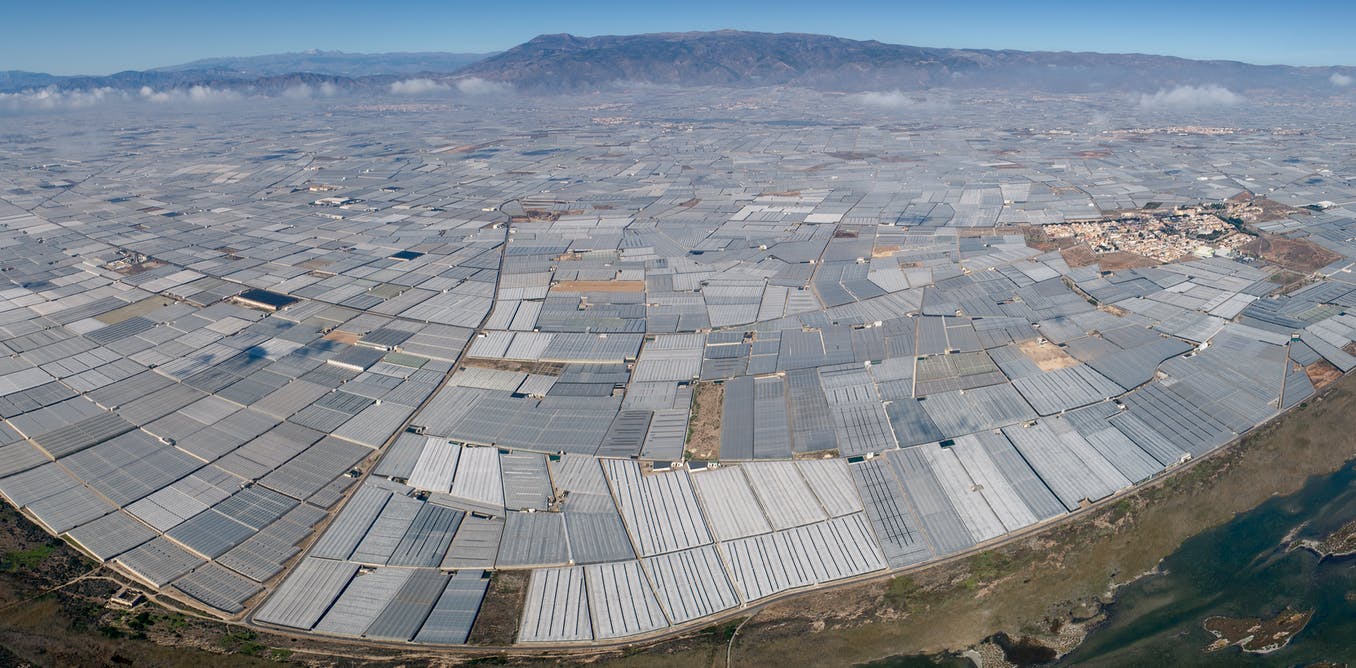
The United Nations (UN) has recently published a report prepared by more than 50 specialists consulted by the UN. It covers agricultural production, climate change, the importance of research and innovation, land use and biological production methods in achieving an efficient production system. This model shares many similarities with the one Almería’s agriculture has adopted in recent years. The production model used mostly in Almería, plastic-covered agriculture, has been highlighted as a “model to follow” since it was introduced more than half a century ago.
Almería’s agriculture fights climate change and optimizes the use of water and soil resources. Almería has a water footprint 20 times smaller than that of national agriculture as a whole.
Almería’s fruit and vegetable production model is a pioneer in meeting sustainability requirements since its beginnings. In addition, it has recently been found to produce the so-called albedo effect, which largely mitigates the effects of climate change. Thanks to the plastic covering these agricultural structures, less solar radiation is reflected in this province, helping to lower the average temperature.

The UN also advocates eating more fruit and vegetables and less meat. Here again, Almería’s agriculture plays a leading role, with its production of more than 3.5 million tonnes of fruit and vegetables per year.